

Seriously Unexpected
Declan Smith's Intense Pursuit of Joy


Declan Smith was standing in a callback for “Into the Woods,” about to sing “Giants in the Sky” in front of everyone—all the other kids auditioning, parents filing in to watch. His mom was there, too.
He sang. He finished. And then both of them started crying.
“I think that was the first lead that I got,” Smith recalls now. “You know, there’s something so freeing about singing ‘Giants in the Sky’—and I think I was overcome by emotion, and so was my mom. That was like a bonding moment for us. But also, I think that was the moment where I was like, ‘Oh, I might be good at this.’”
It’s a story that captures something essential about Smith: the intensity, the emotion, the seriousness with which he approaches his craft. What it doesn’t immediately reveal is that this same person—this artist who speaks passionately about “the importance of telling truthful stories and making sure that the audience is seeing a reflection of humanity on stage”—is also deeply, unapologetically obsessed with “The SpongeBob Musical.”
“I’m a very critical person when it comes to theater,” Smith admits, “but I think sometimes that helps me, because it makes sure that I’m never half-assing it.” He pauses, then adds with characteristic self-awareness: “I would say I’m a very serious and intense person, among other things.”
Among other things. That qualifier matters.
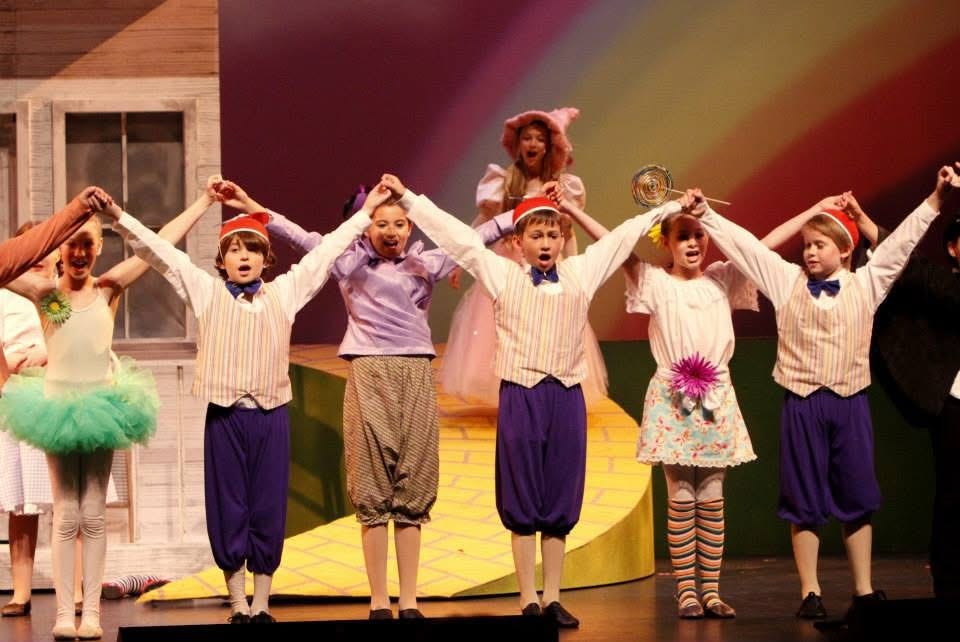
Smith grew up in West Hartford, Connecticut, two hours from New York City, which meant theater wasn’t just accessible—it was constant. “Every time I had a birthday or Christmas gift or anything, I was always asking to see shows. And my mom loved to go with me, so I just went with her. And then once I could drive myself, I was just going to the city way too much. Too many shows to count.”
But before the Broadway pilgrimages, before the serious study of craft, there was a toddler in a Dorothy dress and ruby slippers, performing shows on the coffee table. “I was like two or three years old,” he laughs. “It was just kind of something that came very naturally, and it wasn’t like a really big decision.”
He’d grown up watching “The Sound of Music” and “The Wizard of Oz,” realizing that “singing and storytelling could go in tandem, they could be together.” His family was big on sports, but they also loved theater. At five, he was put in an acting class at a children’s theater. The progression from there was organic: community theater, educational shows, middle school, high school.
He knows he can be challenging. “Even back then I was very much asking like 800 questions. Things like ‘Is this the script? Is this the—’” He pauses, then adds, “Then I met Corinne Kravetz.”
Kravetz, Smith’s high school acting teacher, didn’t just answer his questions—she gave him a philosophy: “We do superior work.” And somewhere along the way, the serious artist inside him emerged—the one who thinks constantly about the weight of representation, about making sure people who are similar to the characters he plays feel seen. “I find it so important to honor what we’re doing and honor characters,” he explains. “I’m very big about that. The importance of telling specific stories and getting them truthful. I’m not always playing characters similar to me all the time, but I want people who are similar to those characters to feel seen.”
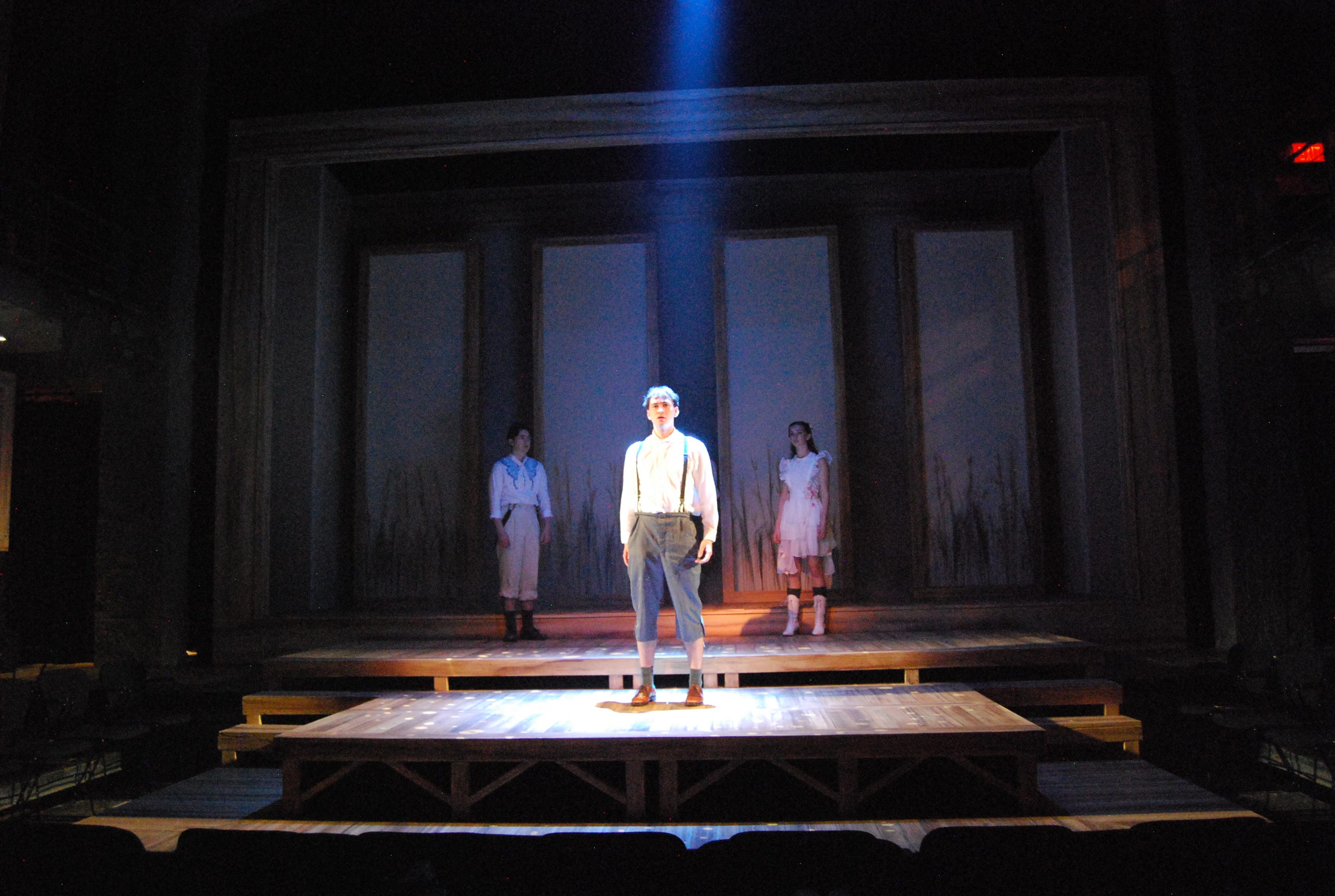
That intensity served him well when he arrived at CCM. Cast as Melchior in “Spring Awakening” his freshman year—a lead role in one of the most demanding shows in the contemporary musical theater canon—Smith faced the kind of pressure that could break a first-year student. Instead, he knocked it out of the park, establishing himself early as someone who could handle complex, emotionally demanding material.
But nothing could have prepared him for what came next.
Before his junior year began, Smith’s father passed away. “It was helpful that I could plug back into the distraction of school,” he reflects. But distraction only goes so far. By the end of that junior year, Smith was ready to confront his grief directly. Working with director Susan Felder, he performed “Sea Wall”—a one-man show about loss—in a small classroom with no tech frills. He told a story about grief that was controlled, open, and surprisingly still. It didn’t push too hard or overreach. It just was.
“Sea Wall” wasn’t just an acting challenge—it was a way to process grief. A way to honor his father’s memory by doing what he does best: telling stories that make people feel seen.
It’s the kind of work that defines Smith’s reputation at CCM—serious, truthful, emotionally available. But it’s only half the picture.
The other half? Well, there’s the SpongeBob thing.
And the Sara Bareilles thing. (”She could save us. She could save Broadway,” he says with complete sincerity–and a bit of a wink.)

In high school, Smith and his best friend Stephanie Ruening-Scherer spent their time putting together elaborate cabarets—renting professional regional houses, writing dialogue, performing with full bands. They wanted to do it all. Stephanie just graduated from the University of Michigan and is now working on the highly anticipated revival of “Bat Boy” at New York City Center, working with stars like Christopher Sieber—performers they’ve both looked up to for years. “I’m so proud to see her success,” Smith says. “It’s exciting to watch her in rooms with people we’ve always admired. That glass wall that separated me from the industry as a kid? It’s slowly being shattered.”
The trajectory feels both distant and familiar—because for Smith, that world isn’t as far away as it once seemed. He still wants to do it all, too. And he has high hopes for his future.
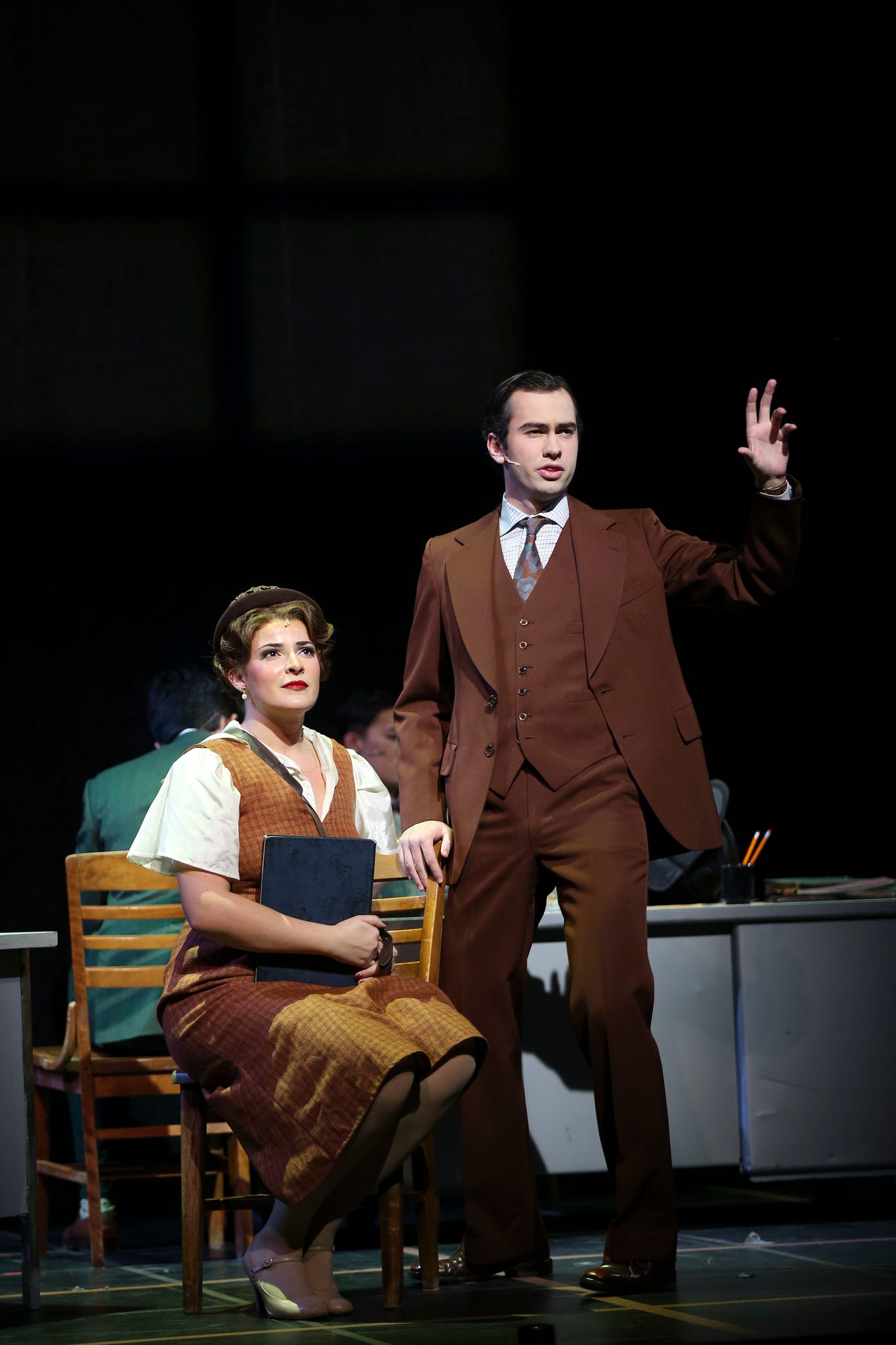
This is the duality of Declan Smith: someone who can speak with profound seriousness about honoring humanity in theater, who performed a gut-wrenching meditation on grief with no technical safety net, who critically analyzes everything he sees—and who also lights up talking about “The SpongeBob Musical” and Sara Bareilles with the same intensity.
“In my home life, with friends and family, I’m very goofy and funny, and I try to be that type of person,” he explains. “But when it comes down to theater and entertainment and performing, I take it very, very seriously. It’s the most important thing to me.”
The balance isn’t contradictory—it’s essential. You can’t honor joy on stage if you don’t genuinely feel it. You can’t tell truthful stories about humanity if you’re not willing to embrace all of it: the grief and the goofiness, the SpongeBob and the Sondheim, the tears at a children’s theater callback and the laughter that comes after.
As he prepares for roles in both “And the World Goes Round” and “Sweeney Todd” this season, as well as his Senior Showcase, Smith carries both sides of himself into the work. The serious artist who honors characters. The joyful performer who never forgot what it felt like to stand on a coffee table in ruby slippers.
Sometimes the most human thing you can do is refuse to choose between depth and delight. Declan Smith never has.
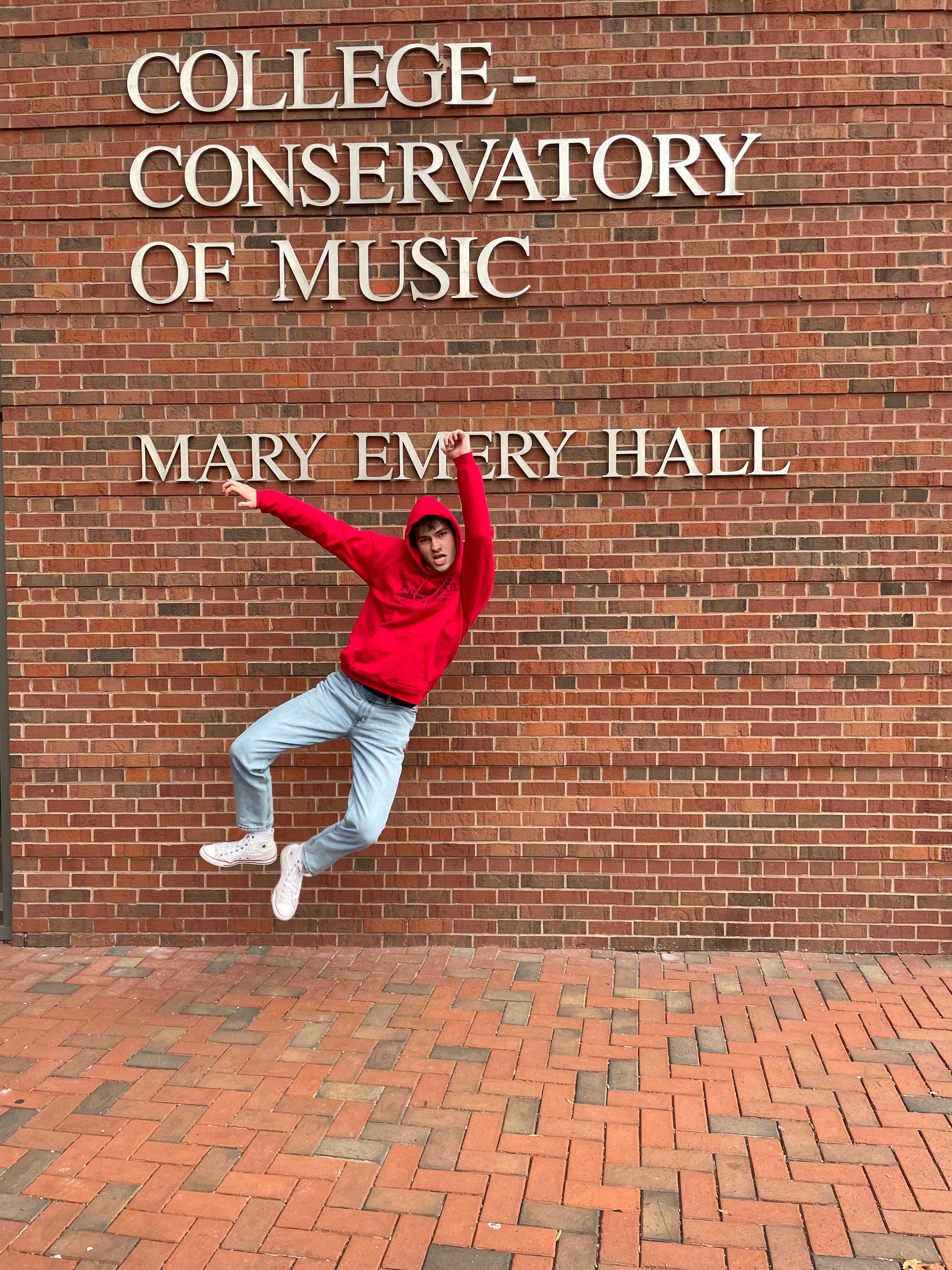
This article is part of “Spotlight Series: CCM Rising Stars” profiling members of the musical theatre class of 2026 at the University of Cincinnati College-Conservatory of Music.