

Doubling Down
I loved "The House on Watch Hill" even more the second time around.

“Would you want to?”
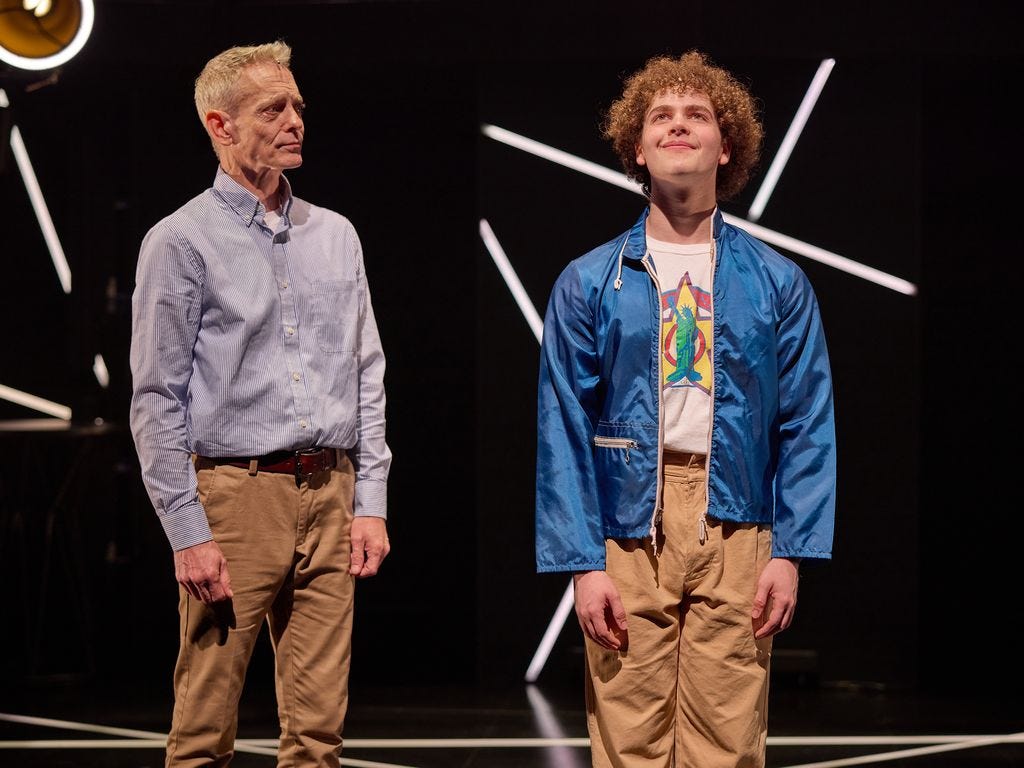
Patrick is stunned. His father has just asked if parents are allowed to come to the haunted house he and his friends have spent the summer building, and he cannot imagine why his dad would want to be there. The dad says it sounds fun. Patrick melts.
So did I. Twice.
I saw The House on Watch Hill at Ensemble Theatre Cincinnati on opening night last week and again this afternoon. It is not unusual for me to see a show twice — when something moves me, I want to relive it, study it, understand what I’m connecting with. It is rarer that I write about the second-viewing. But this show deserves not only a second-viewing but a second-writing.
Some Kind of Nerve

No one was looking at their programs. Not a single head tilted down, not a cough, not a water bottle hitting the floor, taking me out of the moment. In fifteen years of watching theatre, I have learned that this is the tell.
The essay I wrote on Wednesday was about vulnerability. This one is about craft.
Today, I sat in the front row. I do this when I can, because the visual separation between me and the stage disappears, and I can pretend it’s just me and the performers having an intimate conversation. At Ensemble, where the front row is close enough that I could literally touch a performer, this matters even more.
I noticed things I’d missed on Wednesday. Adrian Graff’s physical choices for Patrick — the intentionally awkward stance, the way he holds his shoulders, the wide-eyed wonder. The chemistry between performers had locked in further, too. They’ve now done the show several times, and it shows.
It’s 1984. Patrick is about to start high school, and he sees a local news interview that changes his summer: Duncan Morrison, the entertainment director at Kings Island, is leaving to become a Disney Imagineer. He’s also the director of the YMCA Haunted Castle — Cincinnati’s premier annual haunt — and him leaving creates an opportunity. Patrick wants to take it over.
But he’s fourteen. He doesn’t care. He recruits his friend group and together they get to work.
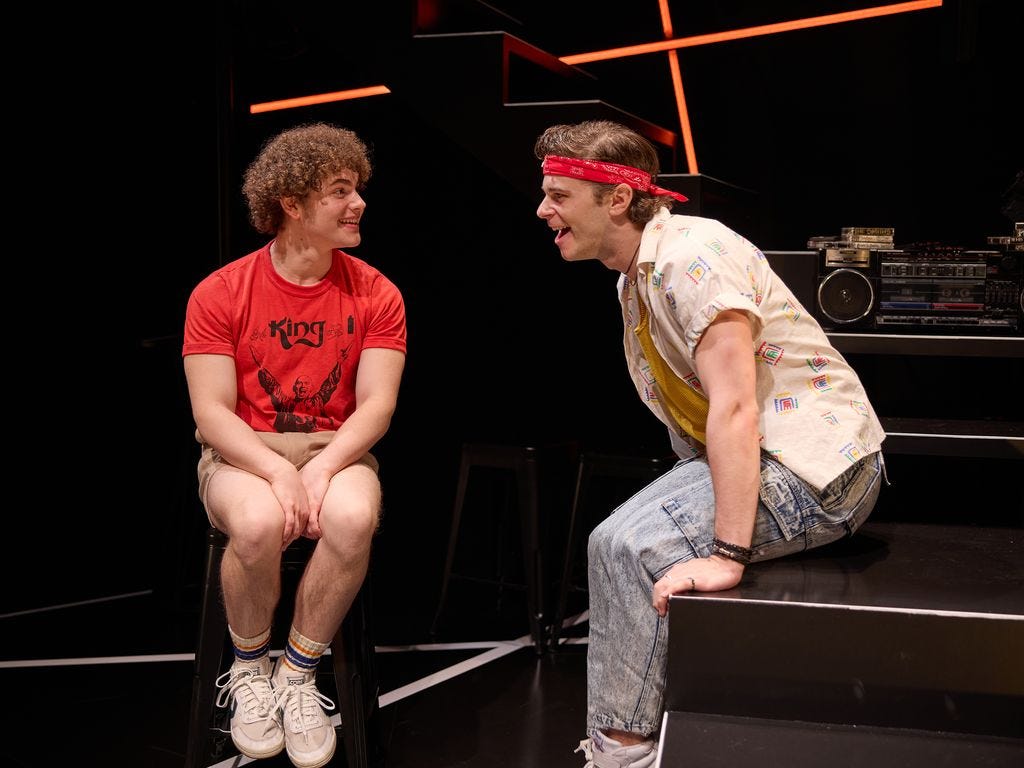
One Friday night, they sneak out to see The Rocky Horror Picture Show where Patrick meets Jason — an openly gay kid, one year older in chronology but a decade in experience. He’s both charismatic and complicated. Jason gives Patrick his number. They start spending time together. Meanwhile, Kristin, Patrick’s best friend, is watching him drift toward someone else, and she does not take it well.
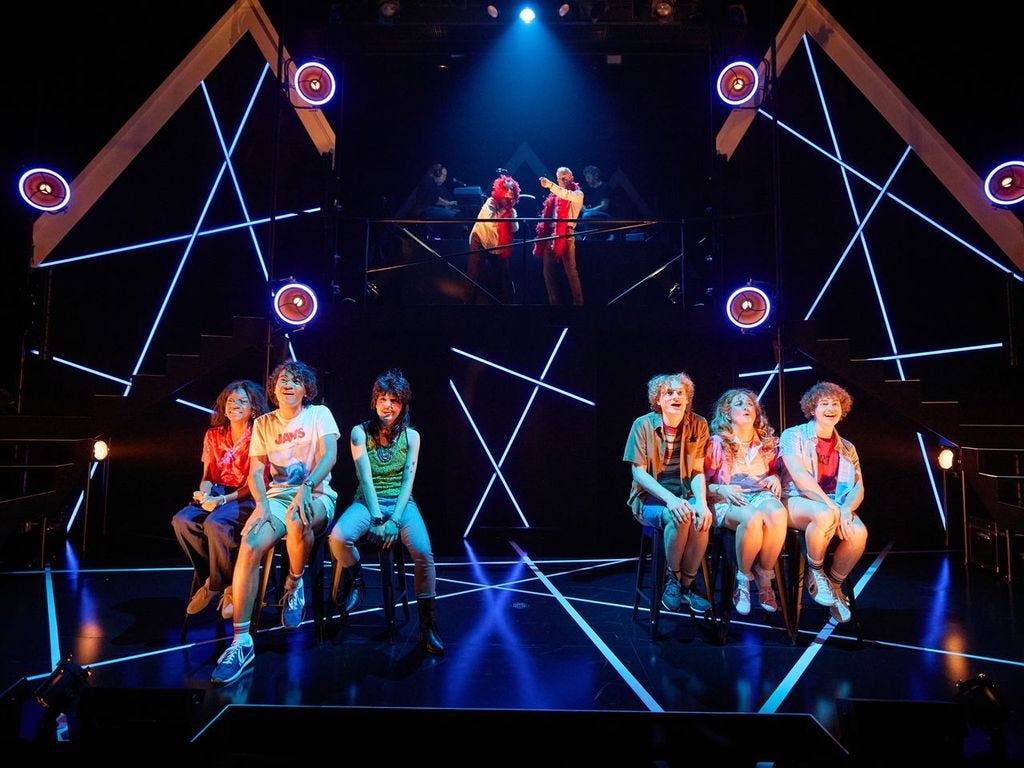
From there, the show explores these relationships while building to a fantastic sequence where we see the haunted house on stage in ways you would not expect. But this is not a show about a haunted house. Not really. It is not a Cincinnati story, even though it is set here and anyone from here will recognize the references. It is also not a gay story, even though Patrick’s coming-of-age and his relationship with Jason are part of its arc.
It is a universal story about growing up different. About being the weird kid with dreams, about the people who help you survive the whole thing. And it’s a show about bravely saying the hard things out loud.
The dad scene I opened with comes late in the show. There are tender and devastating moments throughout, but that one is my favorite — partly because of what the writing asks the actors to do, and partly because of what Graff and Collins do with it. It is some of the finest work in the production.
This is a musical, after all, and the songs landed even better today. Weird Little Kid opens the show and sets the thesis: these are outcasts who found each other through theatre and horror movies. Draw a Line is Joy’s boundary-setting moment — she will design the sets, or she will be paid to paint them, but she will not be taken for granted.
Jason’s arc – and songs – break my heart. I’m an Idol is about the attention Jason gets at a place a kid his age shouldn’t be, and in context is a much sadder song than it appears. Don’t Say You Love Me is about what happens when Patrick says the wrong right thing to him at the wrong moment. Both allow Tommy Sanders to show remarkable versatility.
Another standout moment: Jason talks about wanting to fly above the heads of the haunted house crowd on a zip line. What we see is something else — Jason, in a white bodysuit streaked with blue, suspended above the stage on aerial silks Cirque-style. The choice to render Jason’s vision as aerial dance rather than as literal staging is inspired and deepens the character’s tragic and beautiful story.
Sanders holds nothing back — his raw, emotional performance is a true highlight. And he learned the aerial silks in only three weeks. What a pro. (I cannot wait to see his Evan Hansen at The Carnegie later this summer.)
The rest of the ensemble — Lindell, Poronsky, Geary, da Silva, and Jones — were as strong as I described on Wednesday, and have settled deeper into their roles. Sara Mackie and Jason Collins do the hardest thing, which is morphing in and out of various characters — comedic, tragic, and always believable — and they anchor the entire production.
I also should once again mention the brilliance of the scenic and lighting design. Brian c. Mehring’s subtle choices, like having the lights go out one by one to signify the vandalism that happens in Act Two, accentuate the storytelling but also add to the emotionality of the piece. All of the technical elements, including a better sound balance than on opening night, are sharper now.
Writing autobiographical material requires choosing what truth to honor and what details to change. You have to make a story that serves the audience, not just a memoir that serves yourself. Oberacker has made specific, disciplined choices about what to preserve and what to transform, and the results are visible everywhere in the show — in what we see, in what we are spared, in what we are asked to imagine. The work of the writing is not invisible the second time. It is everywhere. And it is excellent.
So here is what I am asking, after two viewings.
Double down. Not just on this show but on every theatre in town. Cincy Shakes is opening Emma this Friday. The Cincinnati Fringe Festival opens May 29th. The Carnegie has a summer season you shouldn’t miss. Playhouse has a great season next year, too. And there are countless community theatres, semi-professional ones too, that all deserve your attention.
Put your money where your heart is. I do it by writing — by going back, by writing again, by telling you what I think you should see. You can do it however you want. Buy the second ticket. Tell a friend. Bring your mom and dad. Write a check to the company you love. Start a blog or post on Instagram. Subscribe to someone else’s.
I’m doubling down. Your move.
The House on Watch Hill runs at Ensemble Theatre Cincinnati through May 31. Tickets and more at ensemblecincinnati.org. Go. Then go again.
Kirk Sheppard is a proud member of the American Theatre Critic/Journalists Association. He writes about Cincinnati theatre—but mostly about being human. Check out kirksheppard.com for more information.